
.
I saw that Hadas [Emet] Eviatar posted information on social media about a silent vigil by Manitoba Friends of Standing Together in honour of the children of Gaza who have been killed, that took place on June 5 outside the CMHR. On her Facebook page she claimed 70 people attended. (For a more fulsome report of the vigil and counter-vigil that took place, see Penny Jones Square's article in local news)
I want to begin by saying I mourn the loss of all innocent children, and that is a tragic outcome of any armed conflict, especially when no surrounding states take in innocent civilians from the area where the war is being fought.
The Standing Together vigil did not include holding any photos of the Israeli children who were murdered on Oct 7 or were killed in captivity, and there were also no faces of any of the hostages still held in the bowels of Hamas tunnels.
While it does not explicitly endorse a specific solution, Standing Together's actions and goals appear to me to align with the idea of a one-state solution, which would mean Israel is dismantled such that Jews could be a minority in a one bi-national state that is made up of Israel, the West Bank, and Gaza. The movement's language appears to me to shows a preference for a single state rather than two states ( but I do not forsee Israeli Jews ever agreeing to this bi-national one state willingly.)
Standing Together does not highlight that Hamas, as the governing elected body of Gaza, chose not to build schools, hospitals, and provide Gazan children with a better quality of life. Instead Hamas launched an invasion of Israel which it knew would lead to conflict, and did so without building bomb shelters for the children of Gaza. There have even been armed Gazan now trying to prevent Hamas from stealing humanitarian aid for its fighters.And as the Gaza Humanitarian Foundation run by Israel and the US has begun to distribute the aid, the price of flour in Gaza has actually gone down from 1000 shekels to 30 shekels, since Hamas can no longer steal aid and price gouge. Shouldn’t a vigil for the children of Gaza also be calling for Hamas to lay down its arms, and stop stealing aid from Gazan children?
The Standing Together vigil took place on June 5, the anniversary of the Six Day War, and there are a few things to be remembered about this war. From 1948-1967, Jordan annexed the West Bank including the Old City of Jerusalem, and Egypt occupied Gaza. The Palestinians could have easily had an independent state in the West Bank and Gaza during those years but were not asking for it at that time. Why? Because they were not interested in a two-state solution, a Palestine living alongside Israel in peace and security. They wanted to destroy Israel.
In 1967, Egypt under Nasser closed the Straits of Tiran, kicked out the UN peacekeepers, and amassed troops in Sinai. Israel was not looking for war—and in fact, sent a message to King Hussein of Jordan asking him to stay out of the pending conflict. The Egyptians did not tell Jordan that on the first morning of the war, Israel had knocked out the entire Egyptian air force, such that Jordan entered the war without realizing that they would likely lose. Although Israel had not sought a war with Jordan, once Jordanian troops mobilized, Israel engaged Jordan in conflict which resulted in the capture of Jerusalem’s Old City and the West Bank. If the Arab states had not decided to ignite a war to capture all of Israel, Gaza would still be under Egyptian rule, and Gazans could have sought independence from Egypt.
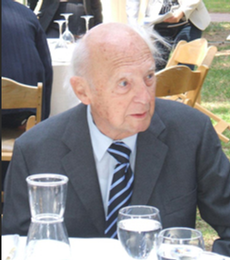
Further, it’s worth noting in the weeks leading up to the war, the public in Israel was so worried about another Holocaust occurring that Israel was digging mass graves. While in Israel, I heard Dr. H. C. Asher Ben-Nathan, who was Israel’s Ambassador to Germany in 1967, speak. He said, “In May 1967, [leading up to the Six Day War]… there was a real fear in Germany that we would see another Holocaust. . . . It was a subject that Germans couldn’t live with.” He recalled that prior to the outbreak of the Six Day War “there were thousands of Germans who wanted to serve in the Israeli army … and thousands of German children sent money from Germany to Israel.” Ben-Natan,who was 86 at the time, said before an international conference in 2007 in Herzylia. “The German government condemned [Egypt’s] closure of the Straits of Tiran, and condemned the Arab threats. Germany declared neutrality, but it was not a neutrality of the heart. . . . There was really a great support [for Israel],”Ben-Natan stated he remembered that at the time, he approached the Germans on behalf of Israel to ask for 20,000 gas masks from Germany, and the request was officially refused. “But they [the Governor] did supply 20,000 gas masks to Israel from civilian warehouses in Germany,” Ben-Natan noted. “At the time, the [German] Minister of Transportation told me that the airport in Frankfurt was available for any Israeli shipments,” he added.
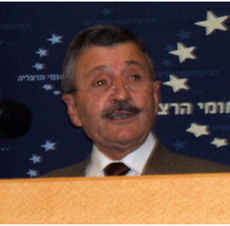
I also heard Jordanian Lieutenant General Ihsan Shurdom speak while at the conference in Israel. Shurdom, who was born in Amman in 1938, joined the Royal Jordanian Air Force in 1959 and was appointed chief of the Jordanian air force in 1983. On retiring from the air force in 1993, he served as an Advisor to King Hussein for a year. Shurdom began his remarks by saying that the 1967 war was caused by the “the continuous rejection by the Arabs of the Zionist entity” and that Jordan’s decision to enter the war was “catastrophic.” He said: "Due to the propaganda of Egypt and Syria, King Hussein felt that Israel would enter and take over Jordanian territory.”
Major General (res.) Shlomo Gazit, former Head of Military Intelligence in the I.D.F. also spoke of the '67 war. “There was panic and fears that there would be 10,000 dead on our side.” In describing the mood of the country leading up to the war, Dalia Rabin, the daughter of Yitzhak Rabin, the IDF Chief of Staff in the Six Day War, said at the conference:"There was despair . ..The sense that the last person out would turn out the lights."
In the days leading up to the war, Gazit recalled meeting with a politically knowledgeable Soviet Jew who had been jailed in Siberia. “He told me that Russia will be willing to wipe Israel off the map. They even would use nuclear weapons . . . I didn’t sleep well that night.”
In Gazit’s view, one of the factors that ultimately led to the Six Day War was Israel’s “building of the national water carrier,” which sent water to the north and south and “made the Arabs realize that Israel had an economic basis to exist, such that they began thinking about preparing for war.”
In an interview I had with Gazit in 2015 while I was in Israel, Gazit told me when the Old City of Jerusalem fell into Israeli hands in 1967, Israel discovered that the Jordanians, "had placed a urinal against the Western Wall, knowing full well it was Judaism's most holy site.” I hope that that is remembered among those who believe the Jewish quarter ought not to be under Israeli jurisdiction.
At the conference, Gazit said, "Our expectation was that we would have the war only with Egypt. . . . We even sent a warning to King Hussein not to get involved."
Gazit told me he was “not sure if the Israeli government would have had the courage” to make the decision for a pre-emptive strike on June 5, 1967 without General Moshe Dayan. Dayan had said at a cabinet meeting before the war that Israel had to accept the Egyptian blockade of the Straits of Tiran as a fait accompli or strike the Egyptians at once. Dayan had warned, "God help us if they hit us first. Not only do we lose our first strike capability. . . but we'll have to fight the war according to their plan . . . and on territory vital to us."
Eitan Haber, the director of the Prime Minister’s Bureau for Yitzhak Rabin from 1992 until 1995, spoke at the conference about the day that Itzhak Rabin went to his home immediately prior to the war, which has since been referred to as Rabin’s “nervous or physical breakdown.” Haber said this should be seen as part of the intense “in–depth” deliberations he took before going to war. “The notion of expected casualties weighed heavily on him,” Haber added.